01Sustainability

Less fuel, measured.

We treat emissions like any other operational metric: instrument it, report it, reduce it. No offsets marketing, no pledges without data.

02Position

What we will and will not claim.

Freight burns fuel. A logistics company that says otherwise is selling something. What we can honestly do is remove the waste our telemetry makes visible: engines idling in queues, half-empty containers, fast sailings nobody asked for.

The three programmes below are the ones we run today. Each is measured from live operational data, and each figure is dated so it can age honestly. When a number stops improving, it stays on this page until we fix it.

03Active programmes

Three programmes, three numbers.

Slow-steaming optimisation

Where a customer's delivery window allows it, we book ocean legs on slower sailings and recover the time in port through pre-lodged customs and same-day cross-dock. Fuel burn falls steeply with vessel speed; a schedule built around the true required-by date usually has slack to spend. The console makes the trade explicit at booking — days added against emissions avoided — and the customer decides.

Schedule-fit sailings booked on 6 of 10 eligible ocean legs (2025)
Telemetry-driven idle reduction

The same telematics that drive our geofence alarms also log engine idle. Trucks idling at gates, borders, and yards burn fuel while moving nothing. Dwell alarms give dispatchers the data to re-sequence arrivals against gate slots instead of queuing engines-on. Idle hours per corridor trip are reported to fleet partners monthly, alongside the on-time figures.

Idle hours per corridor trip down 22% year-on-year (monitored fleet, 2025)

Consolidation rate

An empty cubic metre shipped is pure waste. LCL cargo is consolidated at our Waalhaven facility in Rotterdam so partial loads share containers instead of travelling light, and air consignments ride standing consolidation slots rather than ad-hoc uplift. We track the fill rate of every consolidated unit and treat unused capacity as a routing error to be corrected, not an overhead to be accepted.

78% of LCL volume moved in shared containers (2025)

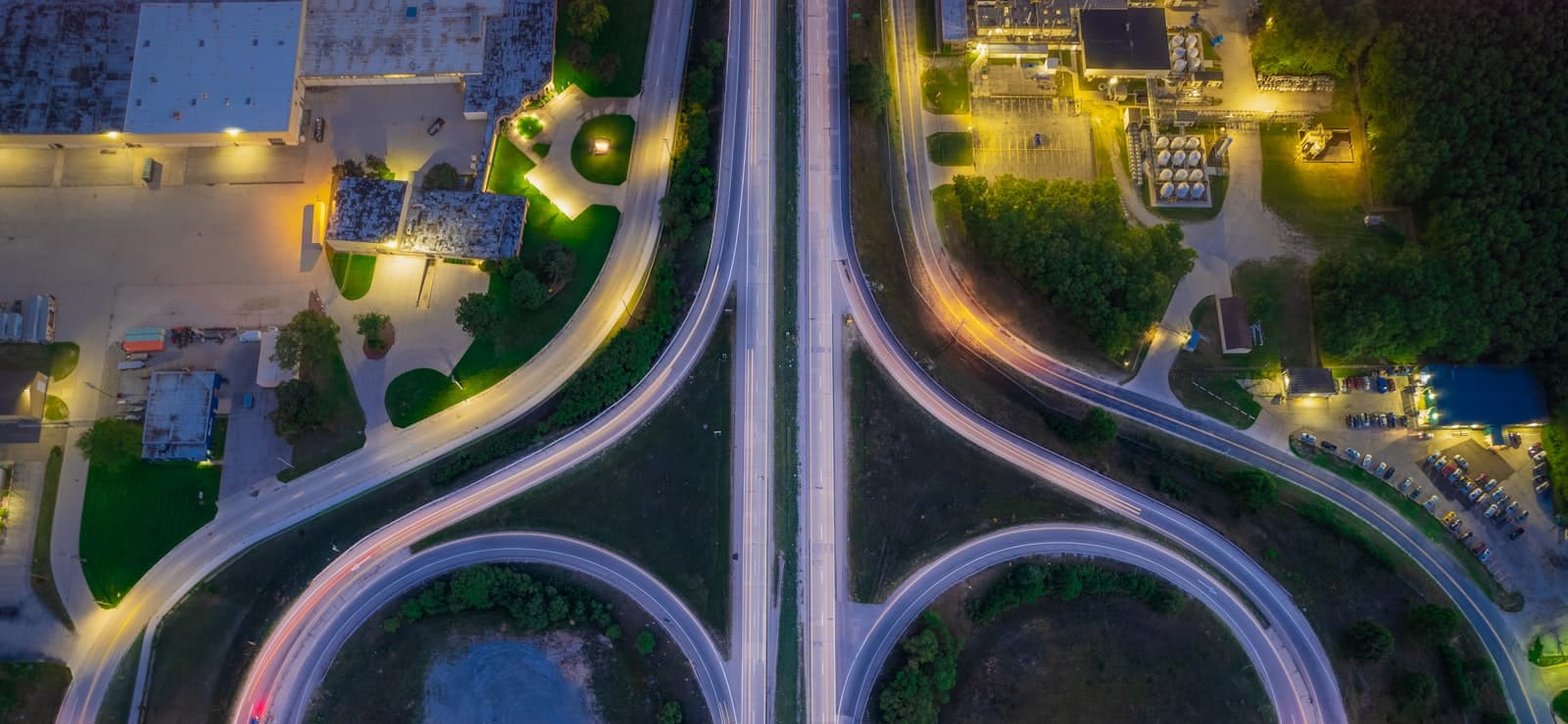
Aerial view of a highway interchange at night with light trails

Corridor network · every idle hour logged

04Reporting

Your freight, your numbers.

Customers can request a per-shipment movement summary — distance by mode, consolidation share, and schedule class of each ocean leg — assembled from the same telemetry that runs the watch floor. It is the raw material for your own reporting, stated plainly.

We do not certify carbon figures we cannot measure, and we do not sell offsets. Where a customer needs formal emissions accounting, we supply the movement data to their chosen methodology.

Request movement data